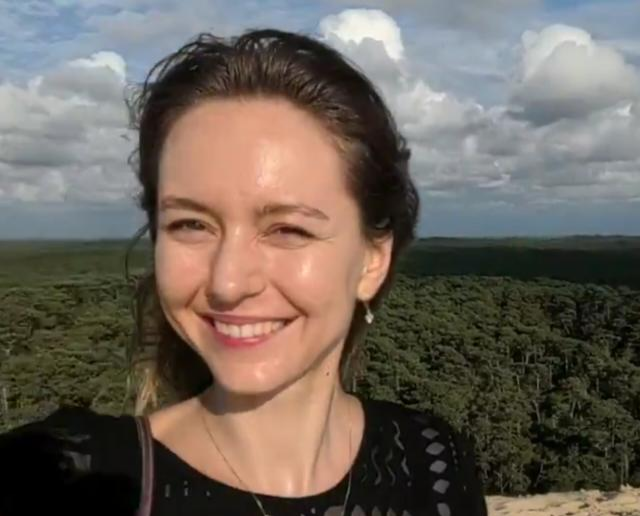
I’m a Zurich-based computational biologist working at the intersection of machine learning and multi-omics.
My research interests lie in developing machine-learning methods for bulk, single-cell, spatial transcriptomics and imaging data, with focus on generative and multimodal deep learning to uncover disease-associated cell states. My goal is robust, interpretable models that inform both biology and clinical decisions.
After training in computer science and bioinformatics at MIMUW, I did my Ph.D. with Prof. Altuna Akalin at MDC-BIMSB, combining machine learning and omics to study how epigenetic signals are measured and change in disease. As first author, I showed that HOT regions, sites that appear bound by dozens of transcription factors, are likely ChIP-seq artifacts linked to R-loops, using sequence-based classifiers to identify GC/CpG-rich features they share across species. I also co-first-authored a review of statistical methods for bisulfite sequencing, contributed to cell-free DNA DNA-methylation biomarker discovery in cardiovascular disease, and co-developed the Bioconductor package genomation and the PiGx BS-seq snakemake pipeline. I have also worked with experimental groups at ETH Zurich (incl. the Laboratory of Nutrition and Metabolic Epigenetics) and the Functional Genomics Center Zurich.
In industry, I have applied deep learning to biomedical and sensor data: an LSTM-VAE (PyTorch) for water-safety monitoring, scVI with scArches transfer learning to classify endometriosis from menstrual-blood single-cell data, therapeutic-target prioritization in oncology (survival analysis, classification, autoencoders), and multi-omics and Enformer-based enhancer analysis in Alzheimer’s disease.
Outside of work, I build end-to-end deep-learning projects, from a diffusion model that inpaints blood-cell images to a nucleotide-level DNA transformer-encoder, all deployed as APIs. See my Independent Projects page.
I’ve collaborated with teams at:

I’m open to research collaborations and to research positions in computational biology and machine learning. Feel free to reach out at katwre (at) gmail.com.